

Image: Generated for Power JDM FM.
On July 10, 2026, a broad group of music industry organizations announced a unified, voluntary approach for labeling the use of generative artificial intelligence in sound recordings.
The program is backed by the International Federation of the Phonographic Industry (IFPI), Recording Industry Association of America (RIAA), American Association of Independent Music (A2IM), Worldwide Independent Network (WIN), Independent Music Companies Association (IMPALA), The Grammys, SAG-AFTRA, and the Human Artistry Campaign.
Its goal is straightforward: give listeners clearer information about whether generative AI played a major role in creating a recording or was used as a limited production tool. The approach introduces two track-level labels: AI-Generated and AI-Assisted: with visual icons supported by metadata and digital delivery systems.
The announcement comes as streaming platforms, artists, labels, and distributors continue to navigate the rapid growth of AI-created music. The labeling system is voluntary for now and is designed to change as technology, industry standards, and legal requirements develop.
Two labels create a simpler distinction
The proposed labels are applied to individual sound recordings rather than entire albums. This distinction is important because an artist may use traditional human performances on one track and generative AI tools on another.
AI-Generated: machine-created primary elements
The AI-Generated label is intended for recordings in which generative AI creates the entirety or the primary portion of the creative elements.
Examples identified in the announcement include:
- A lead vocal performance generated by AI
- A key instrumental performance generated by AI
- Music created entirely through prompts in an AI music system
Under this category, the main creative performance or foundation of the recording comes from generative AI rather than human performers. The label gives fans an immediate way to recognize that the recording was primarily machine-generated.
AI-Assisted: human creativity remains central
The AI-Assisted label applies when a recording is substantially created by humans and expresses human creativity, while generative AI is used for certain expressive or supporting elements.
Examples may include:
- AI-generated background textures
- Limited sound-design layers
- Production effects
- Certain arrangement or enhancement tools
The announcement describes this category as one in which humans perform the lead vocal and primary instruments, while AI supports part of the production process. The label is meant to distinguish creative assistance from a recording where AI generates the central performance.
The framework currently covers generative AI use in sound recordings only. It does not yet label AI use in lyrics, musical composition, music videos, or cover art. The organizations involved say the system is expected to evolve as adoption grows and the industry gains more experience.

Image: Generated for Power JDM FM.
Why the labeling program matters
The announcement reflects a growing need for transparency across streaming, distribution, and digital music platforms. In April 2026, Deezer reported that AI-generated tracks represented 44% of all new music delivered to its platform. Apple Music has also said that more than one-third of tracks uploaded to its platform are “100% AI.”
These figures help explain why track-level identification has become an important industry news theme. The volume of AI-generated music makes it difficult for listeners to understand what they are hearing without consistent information from platforms and distributors.
For fans, the labels may provide more context when listening to hip hop, R&B, pop, electronic music, or other genres where digital production tools are already common. A listener may value a fully human vocal performance differently from an AI-generated vocal, or may want to know when AI was used only for background production.
For artists, the issue is closely connected to trust and authenticity. Human performers, songwriters, producers, and engineers have long built their careers around the relationship between creative work and audience response. Clear labeling can help artists explain how technology was used without forcing every type of AI use into the same category.
For platforms and distributors, a shared system may also make it easier to organize information across catalogs. The coalition plans to work with digital music services, distributors, aggregators, and standard-setting organizations on implementation. Because the program is voluntary, the timing and appearance of labels may vary while companies work through their technical systems.
The labels are not, by themselves, a complete answer to questions about copyright, ownership, compensation, or eligibility for royalties. They are primarily a transparency tool. The announcement presents them as an initial framework that can support broader conversations about provenance and responsible use of AI.
What music industry leaders said
The coalition’s public statements emphasized transparency, human creativity, and the need for a consistent approach.
IFPI CEO Vikki Oakley and RIAA Chairman and CEO Mitch Glazier said in a joint statement:
“Fans want to know whether and how generative AI has been used in the music to which they listen. Given how important human artistry and authenticity is to music lovers all over the world, these labels will provide an immediately understandable and easily scalable approach to transparency.”
They also acknowledged that artists use AI in different ways and said the system may provide additional information as adoption grows and technology changes.
A2IM CEO Ian Harrison focused on the relationship between independent artists and their audiences:
“The independent community knows the magic of music lives in an authentic connection between artists and fans. Technology will keep offering new ways to make and enjoy music, but that bond still runs on trust.”
WIN CEO Noemí Planas described clear labeling as part of a human-centered approach:
“Clear labeling of AI-generated content is central to this: it gives fans the transparency they deserve and supports the human-centered, safety-first approach that the global independent community has championed through the WIN Principles for Generative AI.”
IMPALA Executive Chair Helen Smith called the framework an important beginning:
“We welcome this as an important initial step towards a provenance system that the whole industry can embrace with pride as a quality mark.”
The Grammys CEO Harvey Mason jr. connected the initiative to authorship and artistic intent:
“This initiative ensures that creativity, authorship, and artistic intent remain at the center of every song.”
SAG-AFTRA National Executive Director and Chief Negotiator Duncan Crabtree-Ireland said transparency must be paired with protections for performers:
“Performers deserve a marketplace that recognizes, values, and protects human creativity.”
He added that AI should not be used to “replace, imitate, or exploit artists without consent and fair compensation.”
Dr. Moiya McTier, Senior Advisor to the Human Artistry Campaign, said:
“Honesty has always been the best policy, and fans deserve to know if and how AI has been used in recordings they hear.”
Together, the statements show the range of concerns behind the program. Labels may help listeners understand a recording, but the wider industry conversation also includes consent, fair compensation, credit, copyright, and the future role of human performers.
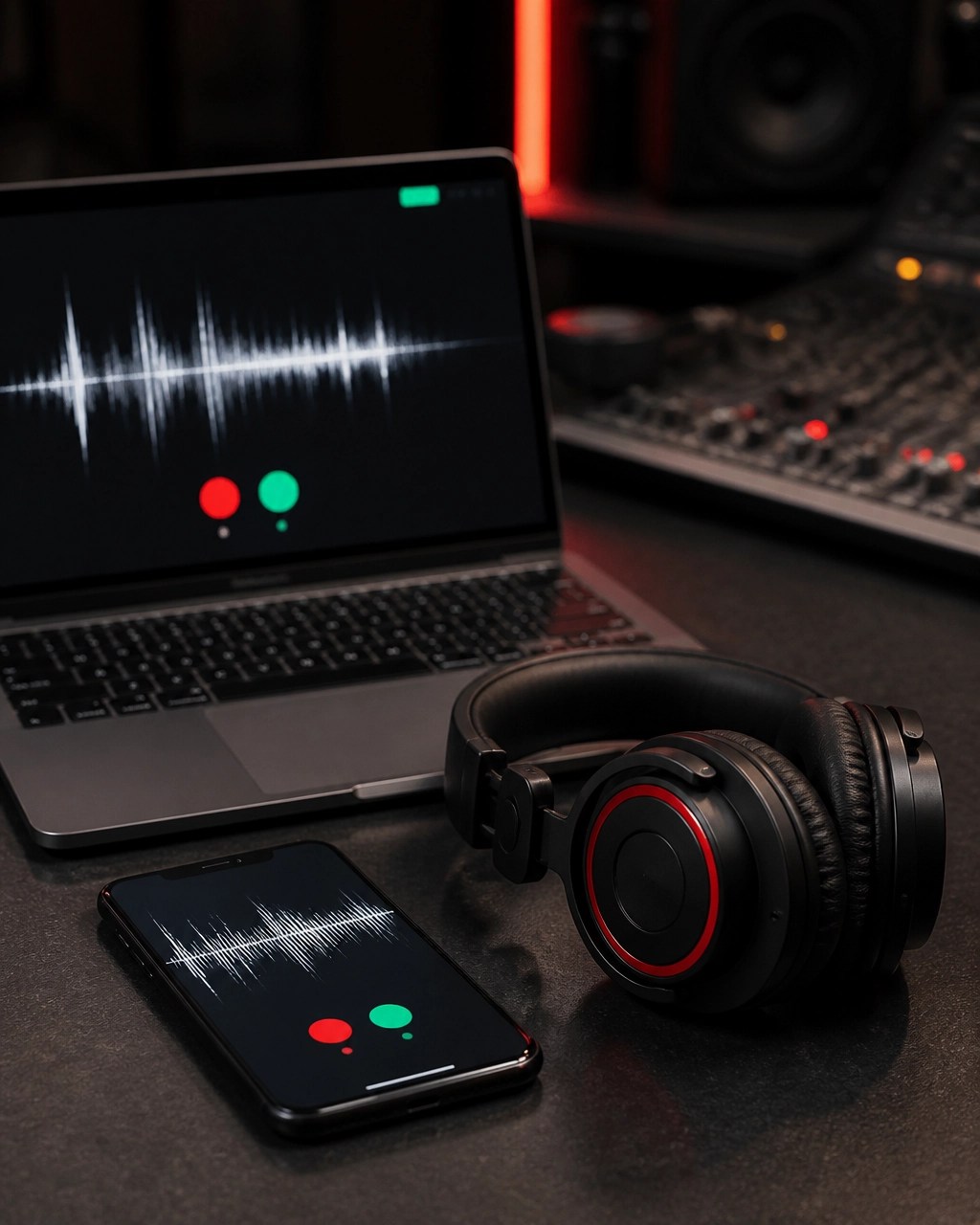
Image: Generated for Power JDM FM.
What independent artists should know before distributing music
Independent artists should treat AI documentation as part of their release preparation. Before sending a recording to a distributor or aggregator, keep a simple record of how generative AI was used, if it was used at all.
That record can include:
- The name and version of any AI tool
- The date it was used
- Whether it generated vocals, instruments, samples, textures, or effects
- Which parts were created and performed by people
- Whether AI changed an existing human performance
- Any relevant tool terms, permissions, or commercial-use restrictions
This information can help an artist make a more accurate decision about whether a track fits the AI-Generated or AI-Assisted category. Distributors may eventually request this information through delivery forms, metadata fields, or other release systems. The exact process may differ from one platform to another.
Metadata matters because a track’s title and artwork are only part of its identity. Credits, ownership information, contributor names, identifiers, and AI-use disclosures can travel with a recording through digital music systems. Incorrect or incomplete metadata can create confusion for platforms, listeners, collaborators, and rights administrators.
Artists should also keep publishing information separate from sound recording information. The current labeling program addresses generative AI use in the recorded audio. It does not yet cover lyrics or musical composition. However, AI use in those areas can still raise questions about authorship, songwriter credits, publisher shares, permissions, and copyright treatment.
For that reason, artists should maintain clear records of who wrote the lyrics, created the composition, performed the recording, produced the track, and owns the master. Split sheets, session files, contributor agreements, and production notes can be useful records when questions arise.
AI labeling also connects to sound recording royalties. Artists who own or control their master recordings may also collect eligible SoundExchange royalties when their music is played on qualifying non-interactive digital services. Labeling a recording does not automatically determine whether royalties are payable, who receives them, or whether a recording qualifies. Those questions depend on ownership, service type, agreements, registration details, and applicable rules.
The most practical approach for independent artists is accuracy. Do not describe a fully AI-generated performance as merely assisted, and do not assume that every small software feature requires the same disclosure as a generated vocal or instrumental performance. Keep evidence of the creative process and review the current requirements of the distributor, platform, collection organization, and relevant rights administrators.
Image: Generated for Power JDM FM.
A first step toward clearer music credits
The new program does not settle every question surrounding AI and music. It does, however, establish a common vocabulary for two important categories: recordings primarily created by generative AI and recordings made substantially by humans with AI used in a supporting role.
As the system develops, its effectiveness will depend on adoption by platforms, distributors, aggregators, labels, and artists. It will also depend on whether the labels remain easy for fans to understand and accurate enough to reflect real-world creative processes.
For listeners following new album releases, hip hop news, R&B, and the wider music business, the labels could become another part of the information shown alongside credits and release details. For artists, they are a reminder that documentation, metadata, and honest communication are becoming increasingly important parts of releasing music in a changing digital environment.
Sources: IFPI announcement, Deezer newsroom report, and Billboard report on Apple Music.
Leave a Reply