

Image credit: Generated for Power JDM FM.
New York City is launching a free workforce development program designed to prepare residents for careers in music, media, and entertainment. The “Made in NY” Media Academy is being created by the NYC Mayor’s Office of Media and Entertainment and NYC Small Business Services in partnership with several City University of New York colleges.
As reported by Billboard, the announcement took place at Queensborough Community College on Tuesday, June 16, 2026. The event included a music production Masterclass with Kid Capri, but the larger focus was on building practical pathways into New York’s creative economy.
The Academy will provide training in audio production, graphic arts, digital content creation, and emerging technologies. The initial programs are structured around skills that can lead to work in recording studios, radio, broadcast, video production, design, publishing, and other media-related fields.
Three training programs serve different creative careers
The first phase of the “Made in NY” Media Academy includes three programs at Queensborough Community College, Kingsborough Community College, and Hunter College. Each track has a different focus, length, and career direction.
Music production bootcamp at Queensborough Community College
The 10-week music production bootcamp at Queensborough Community College is scheduled to begin September 15, 2026.
The program focuses on audio production and hands-on work in recording environments. According to Billboard, the training is designed to help graduates pursue employment in commercial recording studios, live music venues, broadcast, radio, and companies that manufacture music production equipment.
The QCC program page describes instruction in music production, mixing, sound design, audio recording, and industry-standard software. Participants will also work with synthesizers, develop custom sounds, and practice creating melodies, rhythms, and arrangements.
Work-readiness training is part of the bootcamp as well. Students receive support with resumes, cover letters, portfolios, networking, interviews, and job-search techniques. The program also includes access to Pro Tools certification opportunities and placement support after training.
The QCC track is aimed at people who want to understand both the creative and technical sides of music production. That can include aspiring producers, recording engineers, beatmakers, audio assistants, and artists who want a stronger foundation in studio work.
Content creation program at Kingsborough Community College
Kingsborough Community College will offer a seven-week content creation program beginning September 23, 2026. The program is being delivered in partnership with Reel Works.
The track is focused on video editing and digital strategy, with additional training in storytelling, social media marketing, reporting, and the development of publishable digital content. Billboard reported that the program is intended to prepare participants for entry-level jobs in media, journalism, and content creation.
Students will build a professional portfolio while learning how media organizations and employers evaluate digital work. The program also includes professional development workshops, resume and cover letter preparation, networking instruction, mock interviews, and pitch practice.
The KCC Content Creator Bootcamp page identifies a certificate of completion for participants who successfully finish the program. It also lists placement support for three months after training and connections to employers in media and communications.
This track may be especially relevant for people interested in social media production, short-form video, digital journalism, podcast content, branded storytelling, and online publishing. It addresses the growing need for workers who can move between writing, editing, video, and platform strategy.
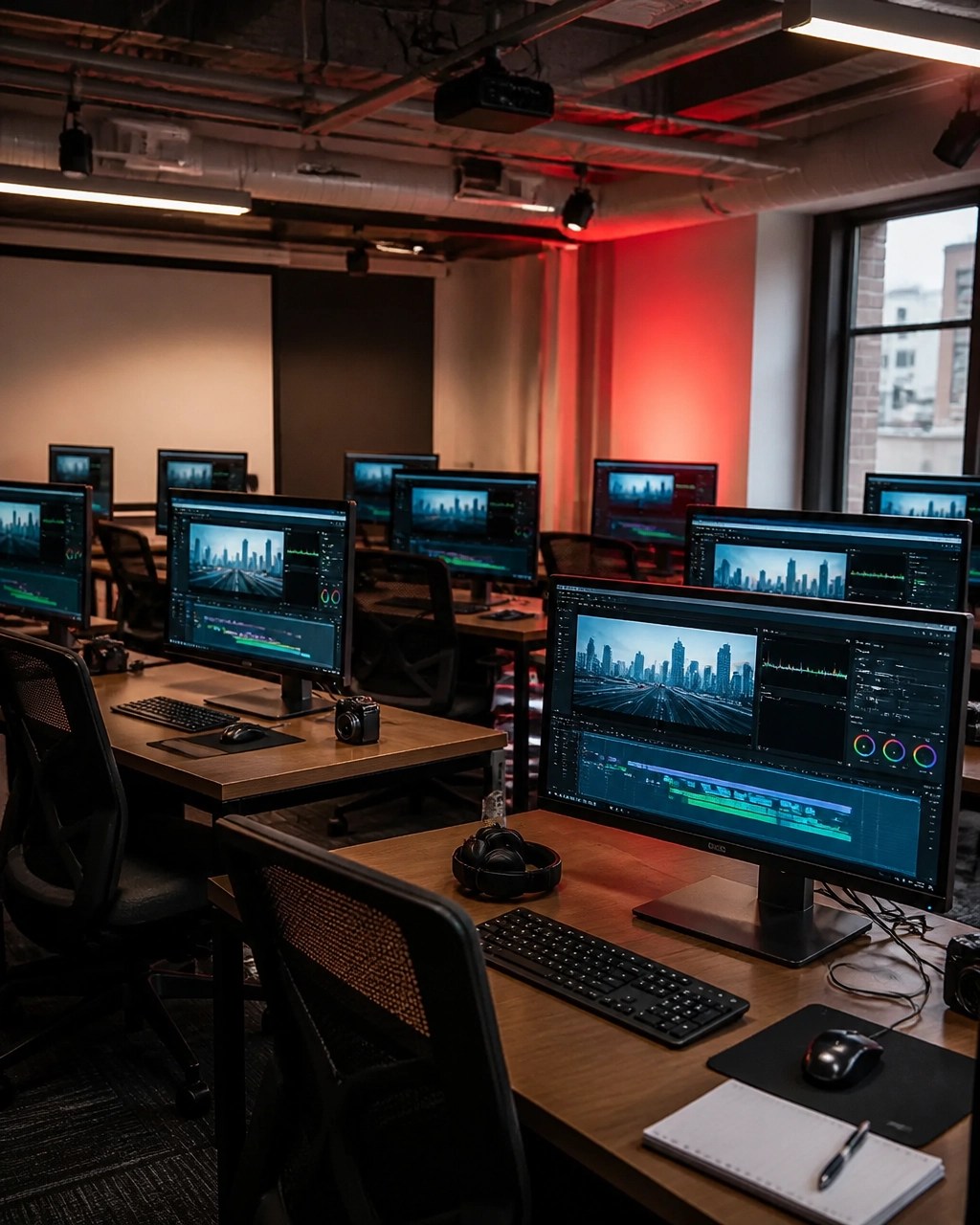
Image credit: Generated for Power JDM FM.
Graphic design bootcamp at Hunter College
Hunter College will host an 11-week graphic design bootcamp beginning in fall 2026.
The program will teach participants how to use Adobe InDesign, Photoshop, and Illustrator. These applications are widely used in publishing, advertising, editorial design, branding, communications, and media production.
A notable part of the Hunter College track is its paid micro-internship component. Billboard reported that participants may gain experience with organizations such as Bloomberg, Hearst, NBCUniversal, ABC News, Penguin Random House, and Shore Fire Media, among others.
Micro-internships can give students the opportunity to work on professional assignments while building a portfolio and learning how creative teams operate. For people entering the industry without extensive experience, that type of workplace exposure can help connect classroom skills with actual employment expectations.
The graphic design program is also part of the Academy’s broader effort to provide credentials and job placement assistance: not only short-term instruction. Billboard reported that the program is designed to respond to employer needs across New York’s creative industries.
Who qualifies for the Academy
The program is intended for New York City residents who meet several eligibility requirements. Applicants must:
- Be at least 18 years old
- Live in New York City
- Be authorized to work in the United States
- Make under $60,000 if employed
Program information from the participating colleges also identifies additional requirements, including a high school diploma or HSE and Selective Service compliance where applicable. Applicants may need to provide documentation showing that they meet the eligibility standards.
Each track also requires a commitment to the training schedule. The QCC program includes weekday evening sessions and Saturday sessions, while the participating colleges may require students to attend in person. Applicants should review the individual program information for current scheduling, documentation, and attendance requirements.
The income requirement is important because the Academy is designed as a workforce development initiative for New Yorkers who may face financial barriers to industry training. Tuition-free access can make professional instruction more available to people who are already working, changing careers, or building creative skills without the resources to pay for private programs.
A workforce program shaped by industry needs
Julie Su, NYC deputy mayor for economic justice, described the Academy as “free training on real industry equipment, with a credential and job placement support at the other end of it,” according to Billboard.
That combination is significant in creative fields, where employers often look for a mix of technical ability, work samples, professional communication, and familiarity with current tools. A certificate alone does not guarantee employment, but structured training and placement support can give participants a clearer path from learning to job searching.
Mayor Zohran Mamdani said, “New York City's creative economy is powered by working people: the musicians, designers, editors and producers whose talent and labor make this city the cultural capital of the world.” He added that the Academy would provide free training for jobs that are hiring now.
The program is also designed to change over time. Rafael Espinal, commissioner of the NYC Mayor’s Office of Media and Entertainment, said the Academy’s offerings will evolve in response to real-time labor market shifts. That approach recognizes how quickly media work changes as new production software, platforms, automation tools, and audience habits develop.

Image credit: Generated for Power JDM FM.
Why it matters for the Tri-State creative community
New York City remains one of the largest media and entertainment centers in the Tri-State area. Its creative economy connects with artists, DJs, producers, videographers, designers, and content creators throughout New Jersey, Pennsylvania, Maryland, and the wider Northeast.
Although the Academy’s current eligibility rules are limited to New York City residents, its model is relevant to the broader regional creative community. Local artists and aspiring producers often need access to professional equipment, technical instruction, portfolio development, and reliable information about industry workplaces.
For musicians, the QCC track offers a pathway into recording, mixing, sound design, radio, and live production. For content creators, the KCC program addresses video editing, digital strategy, and portfolio development. For designers, Hunter College’s program combines software training with paid workplace experience.
The focus on real equipment is especially important. Learning inside a professional studio or media classroom can help participants understand production standards that are difficult to replicate with limited home equipment. It can also introduce students to the workflow, collaboration, deadlines, and technical problem-solving expected in creative jobs.
The Academy’s job placement support may be equally valuable. Many emerging artists and media workers know how to create, but may need help translating that work into a resume, portfolio, interview, or professional network. By including career preparation alongside technical instruction, the program addresses several parts of the transition into employment.

Image credit: Generated for Power JDM FM.
Program information and source
Details and application information are available through the participating colleges:
- Queensborough Community College Music Production Bootcamp
- Kingsborough Community College Content Creator Bootcamp
- Hunter College graphic design program information
This article summarizes reporting by Billboard and program information published by the participating CUNY colleges. For broader music, media, and entertainment coverage, Power JDM FM follows developments affecting artists and creative workers across the region.
Leave a Reply